
Turn idle land into a grid-connected power plant.
Valcan Solar plans, builds and commissions 500 kW – 2 MW ground-mounted solar power plants under PM-KUSUM Component-A — from substation feasibility to DISCOM sign-off — for farmers, FPOs, panchayats and developers across Telangana & Andhra Pradesh.
The PM KUSUM scheme stands as a significant initiative aimed at promoting solar energy in India. This program not only encourages the adoption of renewable sources but also supports farmers by reducing their electricity costs. By utilizing solar power, farmers can enhance their agricultural productivity while contributing to environmental sustainability. The benefits extend beyond individual farmers, fostering a greener economy and supporting energy independence. For more information on how to participate in this transformative program
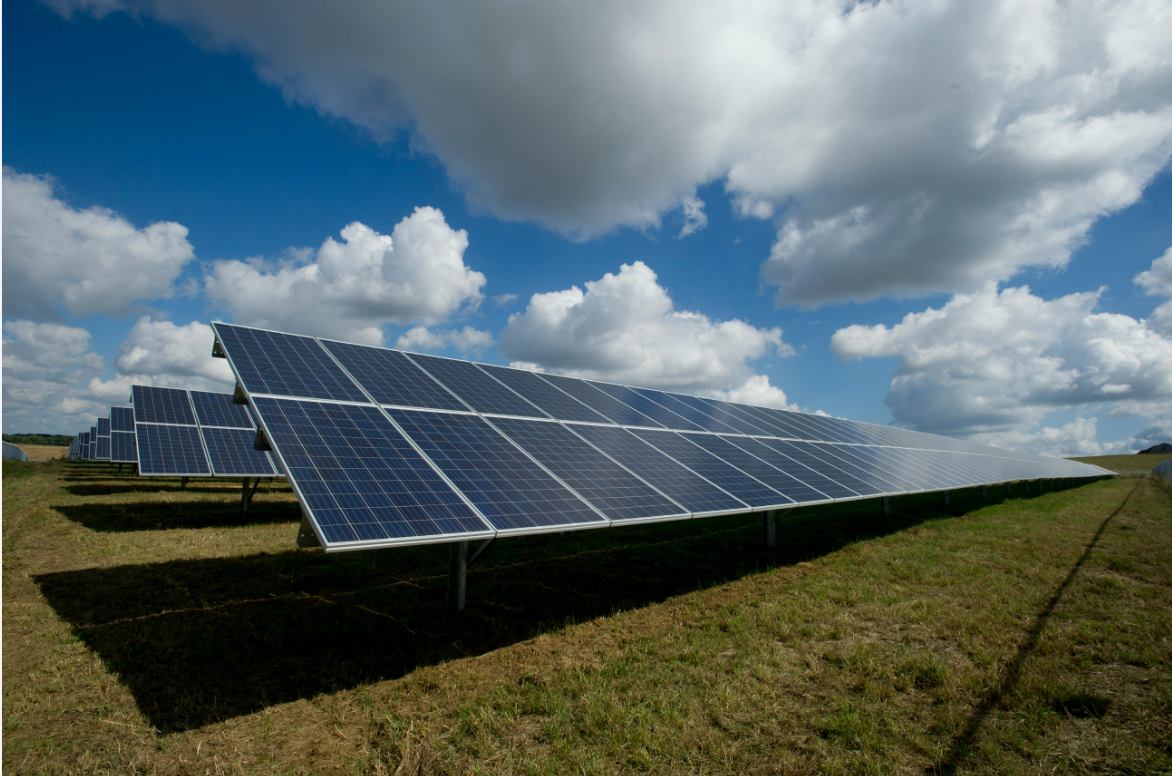
Illustrative general-arrangement sketch — final layout, tilt and row pitch are fixed after your site survey.
-THE SCHEME , IN PLAIN TERMS
Component-A is the land-to-grid part of PM-KUSUM.
The ” Pradhan Mantri Kisan Urja Suraksha evam Utthaan Mahabhiyan” (PM-KUSUM) is the Government of India’s flagship solar scheme for agriculture. It has three components — Valcan Solar specialises in Component-A, the utility-scale ground plant.
Component A
Decentralized ground-mount plants
500 kW – 2 MW grid-connected solar plants built directly on barren, fallow or agricultural land, feeding power straight into the local DISCOM network.
Valcan's focusComponent B
Standalone solar pumps
Off-grid solar-powered irrigation pumps for farms with no grid access, replacing diesel pump sets entirely.
Component C
Solarised grid pumps
Converts existing grid-connected agricultural pumps to solar, either pump-by-pump or across an entire feeder.
Under Component-A, the government's target is 10,000 MW of decentralized capacity nationally. Each plant is developed and connected independently — there's no waiting for a large central project to be built near you; your plant is sized, sited and metered on your own land.
Farmers, cooperatives, panchayats and Farmer Producer Organisations (FPOs) can set these up directly, or lease their land to a developer like Valcan Solar and earn fixed rent instead. Either way, power is sold to the DISCOM under a long-term Power Purchase Agreement (PPA) at a tariff fixed by the state's electricity regulator (SERC).
Land accepted
Barren, uncultivable, pasture or marshy land — or agricultural land, using stilt-mounted structures that leave room to keep farming underneath.
Location rule
Preferably within 5 km of a substation, to limit sub-transmission line cost and reduce transmission losses.
No generation penalty
There's no penalty under the scheme if the plant generates below its expected output in a given period.
Eligibility
Three Kinds Of Landowners This Was Built For.
Component-A calls these Renewable Power Generators (RPGs). If you fit one of these, your land is worth a feasibility check.
Individual farmers
Own barren, fallow or agricultural land near a substation and want a 25-year income stream from it.
Groups of farmers
Pool adjoining plots to reach the 500 kW minimum and share a single grid connection point.
Solar developers
Entrepreneurs and developers without land of their own can lease it from a farmer and build the plant.
IF YOU OWN THE LAND
- You (or your FPO/cooperative) hold the PPA with the DISCOM
- You earn the full feed-in tariff on every unit exported
- Project cost is funded by equity plus a bank loan against the plant
- Valcan handles design, construction, DISCOM liaison and 25-year O&M
IF YOU'D RATHER NOT BUILD IT
- A developer (or Valcan, on request) builds and operates the plant
- You earn a fixed annual lease rent, agreed up front in the lease deed
- No construction cost, loan or generation risk sits with you
- Land title stays with you for the full lease term
Document's Required
Please ensure you have valid digital copies of the following documents to begin your solar subsidy application smoothly.
Aadhaar Card
A valid Aadhaar Card of the applicant for identity verification.
Land Ownership Proof
Valid documentation establishing ownership or legal possession of the land proposed for the solar project.
Keep Your Documents Ready
Ensure all documents are clear, valid, and up to date to avoid delays during the application and verification process.
- How Valcan delivers it
Six stages, one point of contact.
The same team that surveys your land signs off on commissioning — nothing gets handed between contractors along the way.
Land & substation feasibility
Site visit, soil-bearing capacity check, distance and spare capacity at the nearest DISCOM substation, and a shading/irradiance assessment — so you know if the land qualifies before anything is filed.
DISCOM application & tendering
We register the project through the state nodal agency, carry it through the technical tender, and secure the Letter of Award (LOA) in your name or your entity's name.
Design, PPA & documentation
Structural design for local wind loads, the single-line diagram, and the paperwork — 25-year PPA (or lease deed), land-use approvals, and financing documents — drafted and explained line by line.
Modules, structure & civil works
ALMM-listed modules, mounting structure sized to your soil report, boundary fencing and internal cabling — procured and built to the design, not a generic template.
Installation & testing
Module mounting, inverter and switchyard commissioning, and full protection testing ahead of the DISCOM inspection.
Grid sync, metering & 25-year O&M
DISCOM synchronisation, joint metering, and a monitoring and maintenance plan that runs for the life of the PPA — not just the first year.
What a 1 MW PM-KUSUM project typically looks like.
Every project is evaluated after a site survey. The figures below are indicative and are provided to help you understand the typical project structure before moving into detailed feasibility and financial assessment.
1 MW Solar Plant, ~5acsres
PPA income vs. lease income
Understanding the investment
PM-KUSUM Component-A projects should be evaluated based on land feasibility, grid connectivity, PPA terms, project cost and financing structure rather than assuming a fixed subsidy or fixed return. Valcan Solar helps you assess the project from site survey through documentation, EPC execution and commissioning.
15 years of solar experience, one dependable EPC team.
Vulcan Energy Systems has been designing and installing solar since 2012 — Component-A plants are engineered, procured, built and maintained by the same in-house team, not outsourced.
Established 2012
15+ years in Indian solar, based in Secunderabad, Telangana.
ISO 9001:2008 certified
Quality-managed process from survey through commissioning.
Thousands of installations
A track record across residential, commercial and utility-scale sites.
Assured Quality & Service
Quality-focused execution, Design, procurement, civil, electrical and DISCOM liaison under one roof.
-Frequently asked
Before you call, the questions everyone asks.
Pm Kusum Yojana Stands for ?
The PM KUSUM Scheme stands as a significant initiative aimed at promoting solar energy in India. This program not only encourages the adoption of renewable sources but also supports farmers by reducing their electricity costs. By utilizing solar power, farmers can enhance their agricultural productivity while contributing to environmental sustainability. The benefits extend beyond individual farmers, fostering a greener economy and supporting energy independence. For more information on how to participate in this transformative program
Do I lose ownership of my land?
No. If you build and operate the plant yourself, you keep the land and sell power via the PPA. If you lease it to a developer, title stays with you for the lease term — you're renting the land, not selling it.
What if my land isn't near a substation?
Five kilometres is the preferred radius, to keep sub-transmission costs down — it isn't an absolute cutoff. We check the nearest feeder's spare capacity during the survey and tell you honestly if it's workable.
Can I keep farming under the panels?
Yes, on agricultural land, using a stilt-mounted (agrivoltaic) structure raised and spaced to allow continued cultivation and machinery access underneath.
What size plant can I build?
Component-A covers 500 kW to 2 MW. Smaller sizes are considered case by case where the site justifies it technically.
Is there a subsidy for Component-A?
No direct central capital subsidy, unlike the pump-related components. Income comes from the PPA or lease; construction is typically financed through a bank loan against the signed agreement.
Is there a penalty if the plant underperforms?
No — the scheme does not levy a penalty for a generation shortfall against the projected output.
